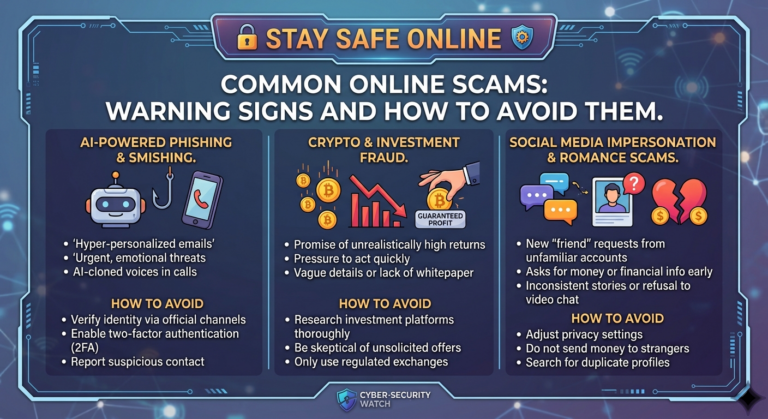

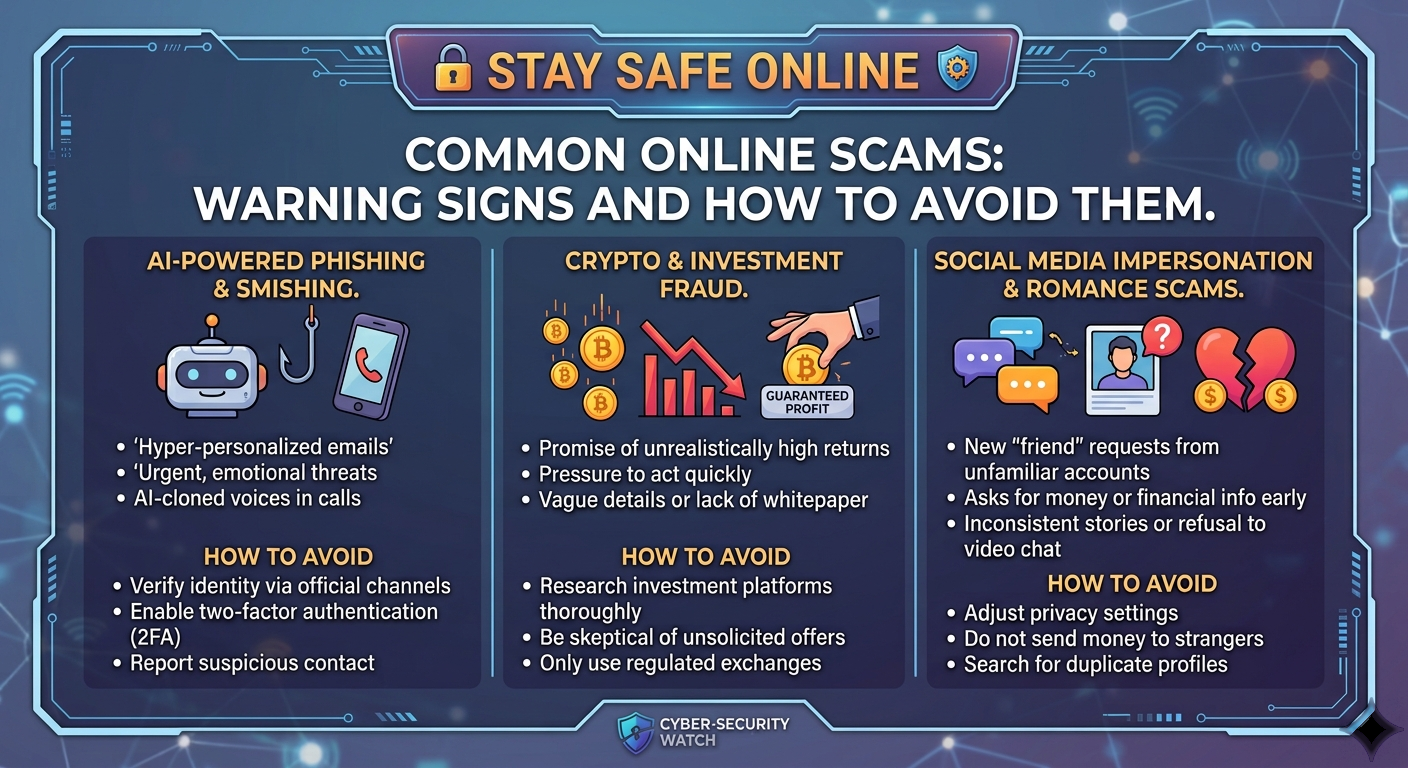
The internet has transformed how we communicate, shop, invest, and earn money. While these opportunities bring convenience, they also create new ways for scammers to target unsuspecting users.
Every year, millions of people lose money, personal information, and access to online accounts because they fail to recognize scam tactics until it is too late.
The good news is that most online scams follow predictable patterns. Once you understand how scammers operate, it becomes much easier to spot warning signs and avoid becoming a victim.
In this guide, we’ll examine some of the most common online scams in 2026 and share practical tips to help you stay safe.
Why Online Scams Continue to Grow
Scammers constantly adapt their methods to match current trends.
Today, they use:
- Fake websites
- Social media accounts
- Messaging apps
- Email campaigns
- Online marketplaces
- Investment platforms
Their goal is usually one of the following:
- Steal money
- Collect personal information
- Gain account access
- Install malware
- Commit identity theft
Many scams succeed because they create urgency, excitement, or fear.
1. Phishing Scams
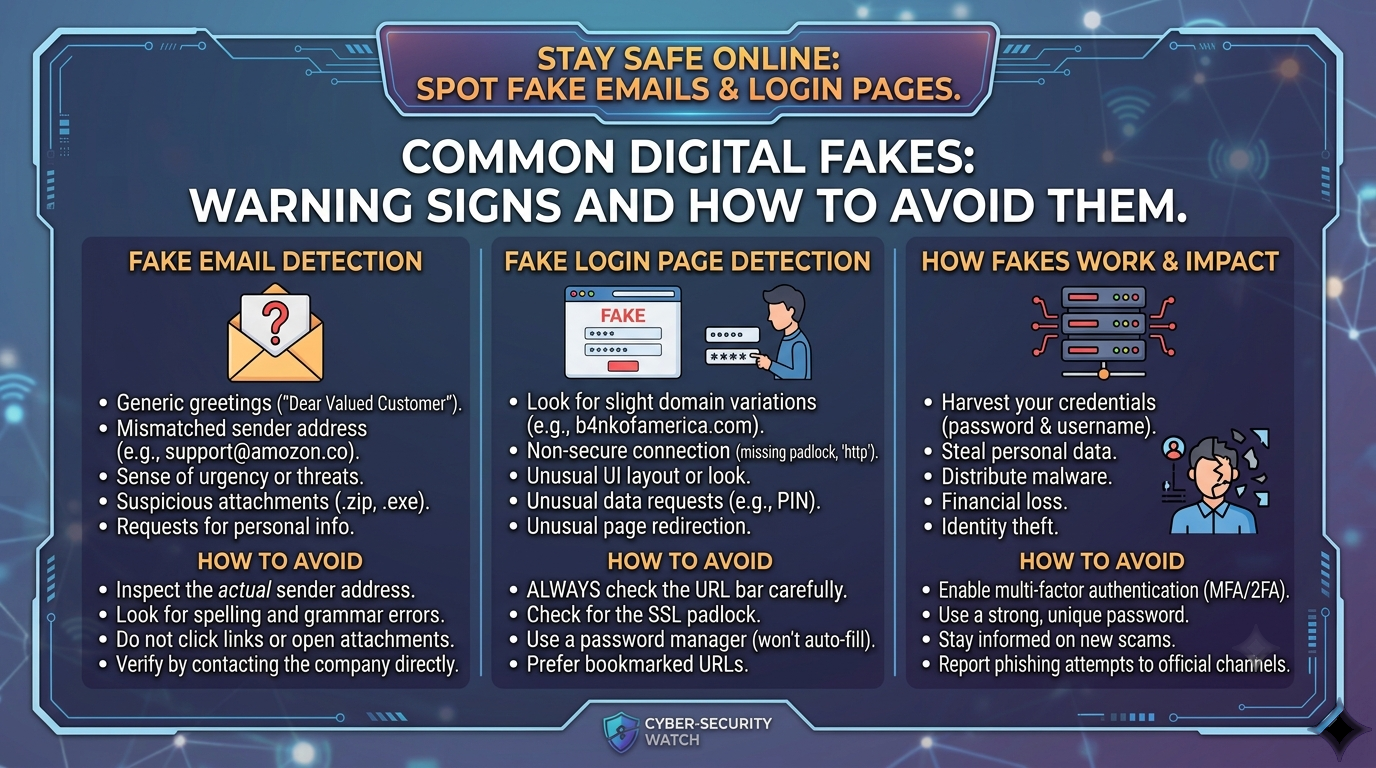
Phishing remains one of the most common online threats.
In a phishing scam, attackers pretend to be legitimate organizations such as:
- Banks
- Government agencies
- Social media platforms
- Online stores
- Payment services
Victims receive messages asking them to:
- Verify account information
- Reset passwords
- Confirm payments
- Click suspicious links
Once users enter their details, scammers capture the information.
Warning Signs
❌ Unexpected emails requesting personal information
❌ Urgent account suspension warnings
❌ Suspicious links
❌ Poor grammar and spelling
How to Avoid It
✅ Visit websites directly instead of clicking email links
✅ Enable two-factor authentication
✅ Verify sender information carefully
2. Fake Investment Scams

Investment scams continue to rise, especially in the cryptocurrency and forex sectors.
Scammers often promise:
- Guaranteed profits
- Daily returns
- Risk-free investments
- Fast wealth
Many victims are shown fake dashboards displaying impressive earnings.
However, when they attempt to withdraw funds, problems begin.
Warning Signs
❌ Guaranteed returns
❌ Pressure to invest quickly
❌ Lack of company transparency
❌ Unrealistic profit claims
How to Avoid It
✅ Research companies thoroughly
✅ Verify business registrations
✅ Avoid investments promising guaranteed profits
3. Online Shopping Scams

Fraudulent online stores are becoming increasingly sophisticated.
These websites may:
- Offer massive discounts
- Sell counterfeit products
- Take payments without delivering items
Some scam stores disappear entirely after collecting customer payments.
Warning Signs
❌ Extremely low prices
❌ No customer support information
❌ Recently created websites
❌ Poor reviews
How to Avoid It
✅ Check independent reviews
✅ Use secure payment methods
✅ Verify website legitimacy before purchasing
4. Romance Scams

Romance scammers create fake relationships to gain trust and eventually request money.
They often:
- Use stolen profile photos
- Avoid video calls
- Share emotional stories
- Claim emergencies requiring financial assistance
Victims may lose significant amounts of money before realizing the deception.
Warning Signs
❌ Requests for money
❌ Refusal to meet or video chat
❌ Rapid declarations of love
How to Avoid It
✅ Never send money to someone you haven’t met
✅ Verify identities carefully
✅ Be cautious of emotional pressure
5. Job Offer Scams

Job scams target people seeking employment opportunities.
Scammers may advertise:
- Remote jobs
- High-paying positions
- No-experience-required roles
Applicants are often asked to pay fees for:
- Training
- Equipment
- Processing
- Certification
Legitimate employers rarely require upfront payments.
Warning Signs
❌ Requests for payment
❌ Unrealistic salaries
❌ Poor communication
❌ No company verification
How to Avoid It
✅ Research employers
✅ Verify company websites
✅ Avoid jobs requiring upfront fees
6. Giveaway and Prize Scams

These scams claim that victims have won:
- Smartphones
- Cash prizes
- Gift cards
- Vacations
The catch?
Users must first:
- Pay fees
- Provide sensitive information
- Complete suspicious tasks
Warning Signs
❌ Winning contests you never entered
❌ Requests for payment to claim prizes
❌ Unverified social media accounts
How to Avoid It
✅ Verify official promotions
✅ Ignore unexpected prize claims
✅ Research organizers before responding
7. Tech Support Scams
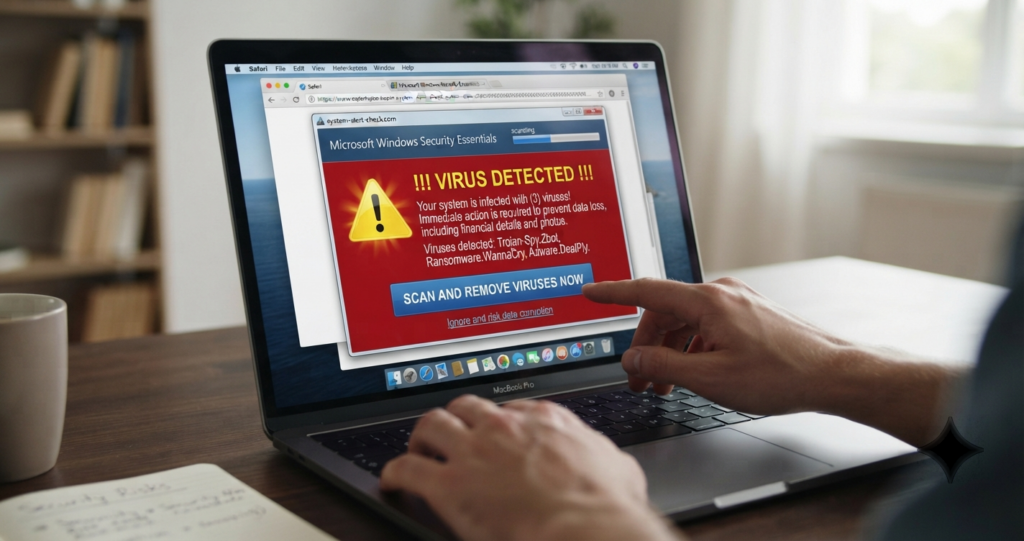
Tech support scammers pretend that your device has a problem.
They may display alarming messages such as:
- “Your computer is infected.”
- “Immediate action required.”
- “Call support now.”
Their goal is often to gain remote access or collect payments.
Warning Signs
❌ Unexpected popups
❌ Requests for remote access
❌ Pressure to act immediately
How to Avoid It
✅ Close suspicious browser windows
✅ Contact official support channels directly
✅ Never grant access to unknown individuals
Universal Red Flags Every Internet User Should Know
Regardless of the scam type, many warning signs remain consistent.
Watch for:
❌ Urgency and pressure
❌ Guaranteed profits
❌ Requests for sensitive information
❌ Upfront fees
❌ Poorly designed websites
❌ Anonymous operators
❌ Unverifiable claims
If something feels suspicious, take extra time to investigate.
How to Protect Yourself Online
Following a few simple habits can significantly reduce your risk.
Use Strong Passwords
Create unique passwords for each account.
Enable Two-Factor Authentication
Add an extra layer of security whenever possible.
Verify Before You Trust
Research companies, websites, and offers before taking action.
Keep Software Updated
Security updates often fix vulnerabilities.
Stay Skeptical
Question offers that seem too good to be true.
Frequently Asked Questions
(Use the Rank Math FAQ Block for this section)
What Is the Most Common Online Scam?
Phishing scams remain among the most common and successful online scams worldwide.
How Can I Check If a Website Is Legitimate?
Review the website’s domain, contact information, online reputation, and security features before sharing personal information.
Are Investment Scams Common?
Yes. Fake investment schemes continue to be one of the fastest-growing forms of online fraud.
What Should I Do If I Suspect a Scam?
Stop communication, avoid making payments, gather evidence, and report the activity where appropriate.
Can Online Scams Be Completely Avoided?
While no method is perfect, awareness and verification significantly reduce the risk of becoming a victim.
FactAdviser Verdict
Online scams are constantly evolving, but the tactics behind them remain surprisingly similar. Most scammers rely on urgency, emotion, greed, or fear to manipulate their victims.
By learning to recognize common scam patterns and taking a few extra minutes to verify information, you can dramatically reduce your chances of falling for fraudulent schemes.